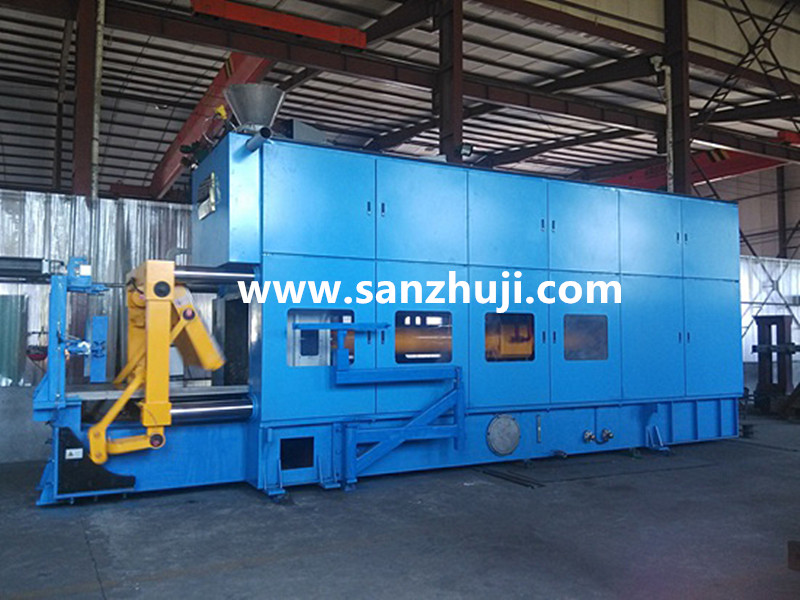
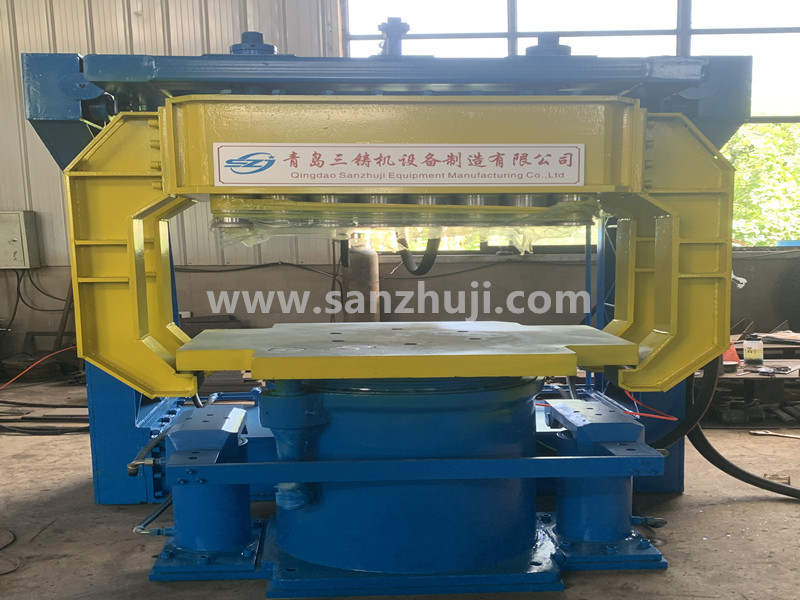
Main Process Flow for Sodium Silicate Sand Casting of Steel Castings
1. Raw Sand Processing and Mixing
1.1 First, the raw sand (typically requiring a high SiO content) is magnetically separated (to remove metallic impurities), dried (to control moisture content), and particle size graded.
1.2 The processed raw sand, sodium silicate binder, and necessary additives (such as organic ester hardener) are added to the sand mixer in a precise ratio. The mixing time is typically controlled within 3-5 minutes to ensure uniform mixing. The sodium silicate addition is generally 3.5%-5% of the molding sand weight.
2. Molding and Core Making
2.1 The mixed molding sand is placed in a sand box with a mold (wooden or metal). The sand is then compacted by vibrating and tamping, especially in corners and intricate areas of the mold. 2.2 For hot spots (thick areas with slow cooling and prone to defects) and large corners in castings, specially formulated face sand is sometimes used to prevent cracks, sand sticking, and other defects. For example, a mixed sand layer made by mixing chromite sand and pearl sand in a specific ratio is used.
2.3 Smooth removal from the mold is essential to prevent damage or deformation of the sand mold.
3. Hardening
CO2 method: Blow CO2 gas into the sand mold/core at a pressure of approximately 0.12-0.15 MPa, a flow rate of 0.8-1.2 m³/min, and a duration of approximately 30-60 seconds. Recycling of used sand is difficult.
Organic ester self-hardening method: This method uses the reaction of an organic ester with water glass to harden the sand at room temperature. The dry mechanical regeneration rate is 80%-90%.
4. Assembly and Pouring
4.1 Accurately assemble the prepared sand mold (lower mold), sand core (forming the casting''''s inner cavity), and upper mold. This is called assembly. Ensure accurate positioning to prevent misalignment (misalignment of the casting''''s edges).
4.2 Pour molten steel (pouring temperature typically within the range of 1550-1600°C) into the assembled mold cavity.
5. Shakeout and Cleaning
5.1 After the casting has cooled to the specified temperature, separate the casting from the sand mold using equipment such as a vibrating shakeout machine.
5.2 Shot blast the casting (typically using steel shot diameters of 0.8-1.2mm and a pressure of 0.5-0.7MPa) to remove surface sand and scale, and then polish any remaining riser residue.
Key Parameters and Control Points in the Sodium Silicate Sand Casting Process
1. Sodium Silicate Quality
The modulus (molar ratio of SiO₂ to Na₂O) is typically controlled between 2.2-2.8, and the density is 1.48-1.52 g/cm³. A modulus of 2.2-2.4 is commonly used in summer, and 2.4-2.6 in winter.
2. Molding Sand Properties
The compressive strength must reach 0.4-0.7 MPa, and the air permeability must be approximately 80%. Residual moisture must be strictly controlled. Chromite sand or pearl sand is recommended.
3. Curing Process
The CO₂ method requires controlled gas pressure, flow rate, and duration. The organic ester self-hardening method requires controlled ambient temperature and humidity to ensure a uniform curing rate. 4. Gating System Design
An open gating system (sprue: runner: ingrate cross-section ratio of approximately 1.2:1.0:0.8) is recommended to reduce turbulence in the molten steel and prevent gas entrapment and sand washout.
5. Recycling and Reuse of Used Sand
Dry regeneration methods, such as mechanical abrasion regeneration or vortex centrifugal regeneration, are used. The loss on ignition (LOI) of the regenerated sand should be controlled below 0.8%, and 20%-30% new sand should be added.
Dry regeneration of water glass sand is a widely used method for recycling used sand in foundries due to its advantages such as simple equipment, low investment, low cost, and no wastewater treatment. However, its effectiveness depends to some extent on the process quality of the original water glass sand (such as the amount of water glass added). The residual Na?O content of regenerated sand is a key indicator to measure its recycling performance and needs to be strictly controlled according to the requirements of castings (such as steel castings are generally required to be ≤0.5%).
Main Process Flow for Sodium Silicate Sand Casting of Steel Castings
- PRE: no more
- NEXT:ZMPS Green Sand Planetary Rotor Sand Mixer